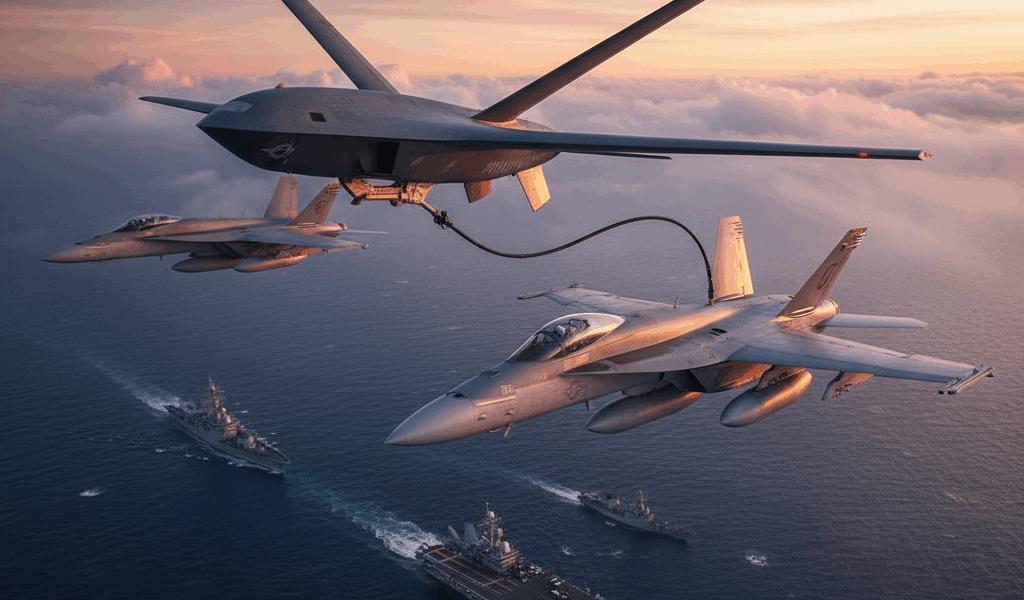
Navy Completes First Unmanned Aerial Refueling Mission from Carrier Deck
Carrier aviation has gotten complicated with all the new unmanned platforms and mission requirements flying around. As someone who’s followed naval aviation modernization for years and talked with aviators about what unmanned tanking means for their operations, I learned everything there is to know about this breakthrough. Today, I will share it all with you.
The U.S. Navy achieved a historic milestone this week when the MQ-25 Stingray successfully completed its first operational aerial refueling mission launched from the deck of USS George H.W. Bush. The unmanned tanker transferred 15,000 pounds of fuel to an F/A-18 Super Hornet during the four-hour demonstration. This is genuinely historic – the first time an unmanned platform has done this from a carrier deck.

“This marks a turning point in naval aviation,” said Rear Admiral Gregory Harris, Commander of Naval Air Forces Atlantic. “The MQ-25 will extend the combat range of our carrier air wings significantly while freeing up manned aircraft for strike missions.” He’s not overstating things – the operational implications here are profound.
Probably should have led with this section, honestly. The Stingray program has been in development since 2018, with Boeing delivering the first operational aircraft to the Navy in late 2025. The MQ-25 can carry approximately 15,000 pounds of fuel and operate at ranges exceeding 500 nautical miles from the carrier. That’s what makes this platform such a force multiplier for the air wing.
Fleet integration is expected to accelerate throughout 2026, with the Navy planning to deploy MQ-25 detachments aboard all carrier strike groups by 2028. Each carrier will eventually operate four to six Stingrays as part of their standard air wing complement. Super Hornet pilots I’ve spoken with are excited about not having to fly the tanker mission anymore – it frees them up for what they actually trained to do.
The successful demonstration paves the way for expanded unmanned operations in carrier aviation. Where this leads next is one of the most interesting questions in naval aviation today.


Leave a Reply