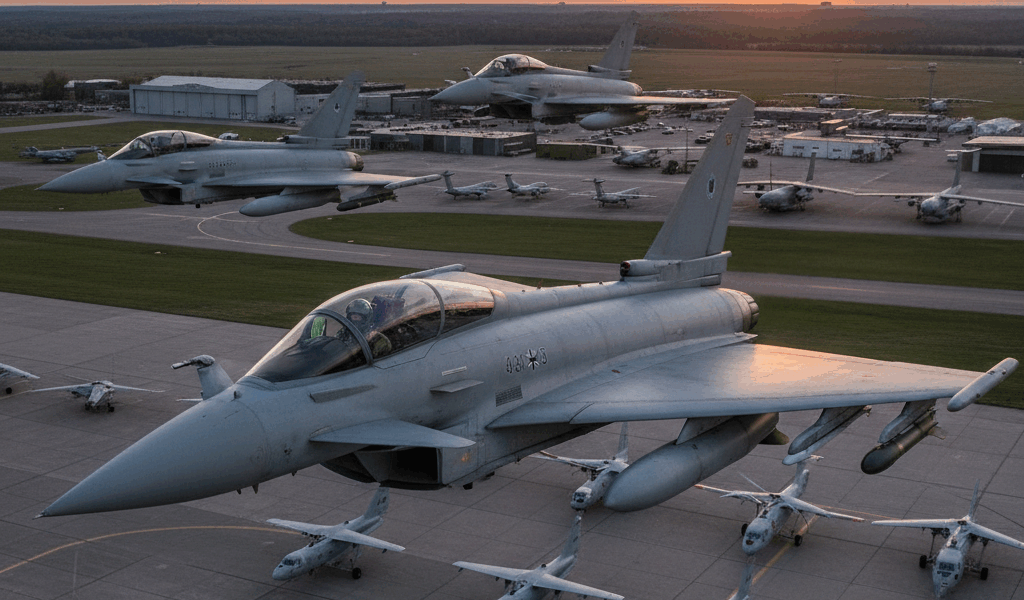
German Air Force Receives First Eurofighter Tranche 5 Aircraft
European fighter procurement has gotten complicated with all the competing programs and national interests flying around. As someone who’s tracked the Eurofighter program through its various iterations and spoken with European defense officials about where things are headed, I learned everything there is to know about this significant upgrade. Today, I will share it all with you.
The German Luftwaffe has taken delivery of its first Eurofighter Typhoon Tranche 5 aircraft at Neuburg Air Base. The upgraded variant features enhanced radar, improved electronic warfare systems, and full integration of advanced beyond-visual-range missiles. This is a big moment for European air defense.
Probably should have led with this section, honestly. Tranche 5 represents the most capable Eurofighter variant to date, incorporating lessons learned from operational deployments and addressing capability gaps identified by NATO air forces. The aircraft features the ECRS Mk2 radar with electronic attack capabilities. That’s what makes this version truly competitive with fifth-generation threats.
“This delivery strengthens Germany’s commitment to European defense and NATO collective security,” said Lieutenant General Ingo Gerhartz, Chief of the German Air Force. “The Tranche 5 gives us a true multi-role fighter for the 2030s and beyond.” German pilots I’ve spoken with are genuinely enthusiastic about the capability improvements.
Germany has ordered 38 Tranche 5 aircraft, with deliveries scheduled to continue through 2030. The jets will gradually replace older Tranche 1 Typhoons currently in service. That transition timeline makes sense given the age of the earliest aircraft.
Airbus Defence and Space, the lead contractor, is also negotiating Tranche 5 orders with Spain and Italy as part of a broader European capability upgrade initiative. If those orders materialize, it would provide a significant boost to the European defense industrial base at a time when indigenous production capacity matters more than ever.


Leave a Reply