“`html
What Depth Perception Tests Measure
I failed my depth perception screening on my first attempt at Officer Candidate School. That sentence still stings a little, even though I eventually passed the retest and went on to fly. The military was testing something I didn’t understand at the time, and one stereotest result nearly derailed my entire pilot pipeline.
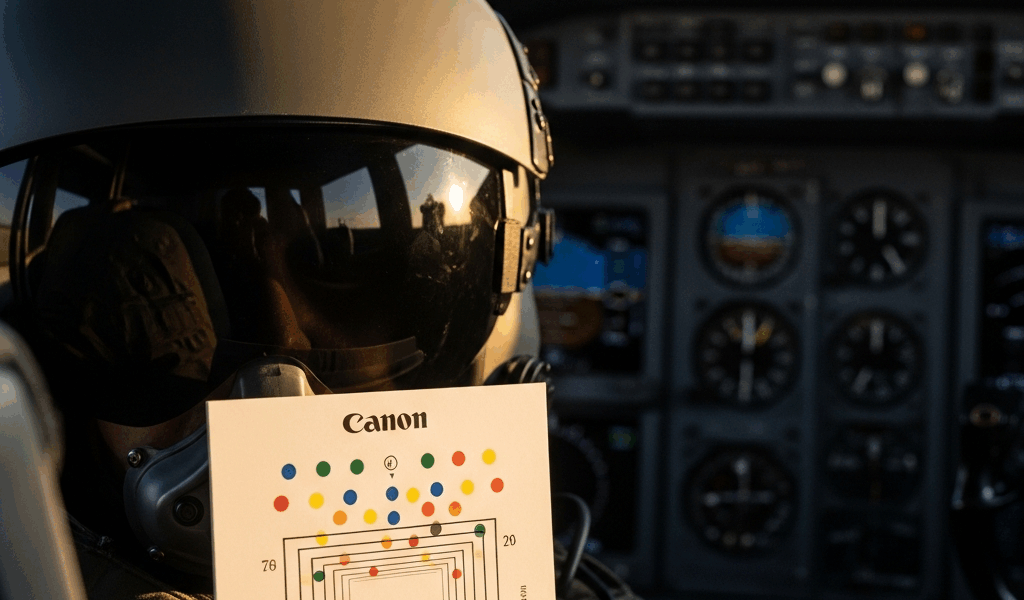
The military uses the Randot Stereotest as its primary depth perception evaluation — it’s basically the gold standard for measuring stereoacuity, which is your ability to perceive three-dimensional space using both eyes working together. You sit in front of a specialized test card or digital display wearing polarized glasses. The tester shows you images with varying degrees of depth separation and asks you to identify which elements appear to pop forward in space. Simple concept. Brutal execution if your binocular vision isn’t calibrated precisely.
The Air Force requires 40 seconds of arc or better. That’s the pass threshold. Navy and Marines use identical standards. The Army operates within the same ballpark. Seconds of arc measure angular separation — the finer your score, the more acute your depth perception. Score 20 seconds of arc and you’re detecting depth differences at half the threshold of someone scoring 40. This matters because pilots execute maneuvers in three-dimensional airspace while processing instrument data simultaneously.
Why the obsession? Cross-check the accident data. Depth perception failures correlate directly with spatial disorientation incidents, carrier landing mishaps, and formation flight errors. In low-visibility conditions or at night, your stereotest score becomes mission-critical. A fighter pilot executing a close-formation break requires microsecond depth perception decisions. A helicopter pilot conducting terrain flight in degraded visibility needs instantaneous spatial awareness. The military isn’t being arbitrary here.
Failure Rates by Branch and What Triggers Disqualification
About 2–3% of pilot candidates fail their initial stereotest screening across all services. That sounds small until you realize thousands of candidates pipeline through annually and even small percentages add up.
The Air Force maintains PULHEMS standards that classify depth perception into categories O1 through O4. O1 is pilot-qualified. Scoring O2 or worse triggers disqualification. Navy and Marine standards mirror this — anything below 40 seconds of arc at distance requires remediation or waiver. The Army’s aviation standards align similarly, though they occasionally show flexibility on certain aviation-specific roles.
Here’s what matters: some failures are permanent. Some aren’t. That distinction changed everything for me when I first learned it.
Permanent disqualifications include uncorrected refractive errors that prevent achieving the 40-second threshold even with correction. Amblyopia — lazy eye — that resulted in structural damage or irreversible neural imbalance. Strabismus exceeding 8 prism diopters. Certain retinal pathologies. These conditions aren’t waiverable for pilot roles. The military has experimented with waivers for some candidates, but the approval rate hovers near zero for pilot pipelines specifically.
Temporary or addressable failures include testing-day factors: fatigue, stress, medication side effects, or poor testing environment conditions. Uncorrected refractive error. Subtle binocular imbalances that improve with proper lens prescription. These candidates get retested, usually within 30–90 days.
Aviation medicine experts estimate 60–70% of candidates who fail initially pass on their second attempt. That second-attempt population skews toward people whose initial failure resulted from correction issues or environmental factors rather than structural vision problems.
Retest Timeline and How to Request One
After I failed my stereotest, I spent four days in complete panic before my flight surgeon pulled me into his office and explained the retest process. Probably should have opened with this section, honestly — the timeline uncertainty killed my confidence more than the actual failure did.
Contact your flight medicine clinic or aviation medical examiner within one week of your initial failure. Waiting doesn’t help. Most military treatment facilities can accommodate a retest within 30–45 days. Civilian contractor aviation medicine clinics sometimes move faster — 15–30 days is achievable if your candidate processing center contracts with a regional vendor.
Your flight surgeon or AME will order specific corrective lens trials before your retest. This is critical. Many initial failures stem from uncorrected astigmatism or subtle myopic shift that nobody caught during the initial vision screening. The retest protocol mandates lens optimization using the Randot or Titmus stereotest equipment under standardized lighting (500 lux minimum). You cannot use civilian optometrist results from your local eye doctor’s office — military testing equipment and protocols differ meaningfully from civilian practice.
Branch-specific pathways vary slightly. Air Force candidates route through their assigned AFRL office or the Aviation Medicine Selection Board. Navy and Marine candidates work through NAMI (Naval Aerospace Medical Institute). Army Aviation candidates coordinate through their MEPS aviation medicine section. Each pathway has different administrative lead times, but the clinical retest window remains similar across all services.
Expect to provide documentation of any intervening vision correction changes. If you got new glasses or contacts between your initial failure and retest request, bring those records. The AME needs that baseline to understand whether your initial failure reflected an undetected refractive error or an actual stereoacuity limitation.
Preparation and Strategies for Second Attempt
Can depth perception be improved? Limited answer. You cannot train stereoacuity like you train gross motor skills. Your binocular vision is largely fixed by your neural wiring and ocular anatomy. However — and this matters — you can optimize your performance on test day.
First, arrive rested. Sleep deprivation degrades binocular alignment and increases visual fatigue during sustained testing. Eight hours the night before your retest. That’s not motivational psychology. That’s neurology. Your ciliary muscles fatigue under sustained accommodation, and tired eyes show measurably worse stereoacuity on clinical testing.
Second, avoid eye strain the day before and morning of testing. No extended screen work. No contact lens overwear. Your ocular surface and accommodation system need optimal state. Wear glasses to the AME appointment instead if you use contacts — contact lens hydration fluctuates throughout the day, introducing subtle refractive variability.
Third, eat a light breakfast but do not skip meals. Hypoglycemia affects visual focusing and cognitive processing during sustained testing. You need stable blood sugar but not a full stomach that might cause mild nausea during the accommodation stress of stereotest administration.
Fourth, understand what you’re actually looking for during the test. The Randot presents images in polarized pairs. You’re identifying which elements appear elevated or recessed in space. Don’t overthink this. The moment you start second-guessing your spatial perception, you introduce hesitation that kills your score.
The biggest mistake I made during my retest prep? Assuming the second test would be easier. It wasn’t. It was identical in difficulty. I walked in expecting a softened threshold and got blindsided by the same challenge. Reframe your mindset. The retest is a confirmation of your actual depth perception capability, not a consolation round with lower standards.
When Depth Perception Failure Ends Your Pilot Career
Sometimes the retest doesn’t go differently. Your second stereotest score matches your first, or worse. That’s when permanent disqualification becomes real.
Pilot pipeline depth perception waivers remain exceedingly rare. We’re talking single-digit approvals per year across all services. The precedent exists, but approval probability approaches near-zero for active pilot candidate waivers. You have documented appeal pathways through each service’s aerospace medical board, but those appeals succeed primarily when new medical evidence emerges — new lens prescription, underlying condition correction, or intervening medical treatment that wasn’t available at initial testing. Simply requesting reconsideration of the same test result yields denials 95% of the time.
But your military aviation career doesn’t end. It pivots. The same services desperate for fighter pilots have equal need for weapons officers, flight engineers, combat systems officers, and remotely piloted aircraft pilots. WSO pipelines do not enforce identical depth perception standards because WSOs manage tactical systems from backseat positions with different spatial demands. Flight engineer routes exist in cargo and transport communities. Enlisted aircrew positions in maritime patrol or special operations require depth perception but operate under relaxed medical thresholds.
I’ve known candidates who failed their pilot depth perception screening and pivoted into WSO training. One became an electronic warfare officer. Another transitioned into aerial reconnaissance. Neither commanded fighters, but both flew combat missions. The military aviation world extends far beyond the pilot seat.
If your retest confirms permanent disqualification, request a meeting with your career counselor to explore alternative aviation career fields immediately. Waiting amplifies disappointment. Acting positions you within the broader aerospace career ecosystem while your candidacy remains active in the selection pipeline. The window closes faster than you’d expect once official disqualification occurs.
“`


Leave a Reply