
ADHD Is a Disqualifier — Here Is What That Actually Means
Military pilot licensing has gotten complicated with all the misinformation flying around about ADHD. So let me cut through it. Can you become a military pilot with ADHD? Yes — but only through a waiver. The baseline rule lives inside DoDI 6130.03, the DoD instruction governing medical fitness for flying duty. ADHD diagnosed or treated within the past five years disqualifies you from aviation training. Full stop.
But what most articles skip entirely: that disqualification isn’t a career death sentence. It’s a starting point for negotiation.
Three situations determine everything here. First — you were diagnosed and treated as a child, finished treatment years ago, no current medication, no current symptoms. Second — you carry a formal diagnosis and are actively taking stimulants like Adderall or Ritalin right now. Third — you suspect ADHD but have never chased a formal diagnosis. Each of those paths carries different approval odds and wildly different timelines. Don’t confuse them.
Recent medication use is the heaviest anchor in this process. A flight surgeon’s concern isn’t really that you have ADHD. It’s that stimulant medications affect judgment, risk tolerance, and sustained attention in ways that are genuinely hard to untangle from the underlying condition itself. That’s because the waiver system was built on military medicine learning — slowly, case by case — that some pilots with ADHD histories can perform flight duties safely. Waivers get used regularly. Not thousands per year, but this is not a unicorn scenario either.
The Off-Medication Evaluation and What Flight Surgeons Look For
Probably should have opened with this section, honestly. Most branches require a documented period off stimulant medication before any formal evaluation can begin. That window is typically 90 days — though some flight surgeons ask for 6 months to get a cleaner picture. It’s the single biggest timeline constraint candidates never see coming.
During those off-medication months, your job is simple: maintain baseline performance. No academic failures. No administrative headaches. No workplace complaints. You’re building a paper record that says, without ambiguity, “I function without medication.” Flight surgeons will pull your school transcripts, employment history, and any psychological testing going back a decade. They’re not hunting for perfection — they’re hunting for evidence that your executive function, attention span, and impulse control sit within acceptable ranges unmedicated.
The neuropsychological evaluation itself is specific and genuinely thorough. A military flight surgeon will order assessments like the Conners CPT (Continuous Performance Test), the TOVA (Test of Variables of Attention), or similar computerized tools. You sit at a screen and respond to stimuli under timed pressure. Paper-based measures follow — Wisconsin Card Sorting Test, digit span tests, structured clinical interviews. It sounds clinical because it is. Budget somewhere between $1,500 and $3,000 if you’re going through a civilian neuropsychologist, and block off 4 to 6 hours for the actual testing day.
What the flight surgeon is really weighing is functional performance — not the label. A candidate with a childhood ADHD diagnosis who demonstrates normal attention span, impulse control, and decision-making on objective testing has a genuine shot. A candidate with recent Adderall use and a positive screen for active symptoms does not. That’s what makes the off-medication window so decisive.
How the Waiver Process Differs by Branch
Air Force. Historically the most conservative branch on ADHD waivers for pilot training. Flight surgeons here are cautious — particularly about stimulant history within the last five years. If your diagnosis was childhood-only, treatment ended by age 14, and you’ve been off all medication for five-plus years, your odds improve substantially. Recent medication use makes approval difficult, not impossible, but difficult.
Navy and Marine Corps. Naval Aviation shows slightly more flexibility than the Air Force, especially for candidates with resolved childhood ADHD. The Naval Aerospace Medical Institute — NAMI, located at NAS Pensacola — runs the formal evaluation, and their framework puts more weight on current functional status than on historical diagnosis alone. Marine Corps pilots move through the same pipeline.
Army. Army Aviation, which means helicopter pilots primarily, has been somewhat more permissive than fixed-wing branches. That said, it varies — individual flight surgeon judgment plays a bigger role here than in other branches. The waiver process exists and gets used more frequently here than elsewhere.
Coast Guard and National Guard. Coast Guard aviation operates under its own medical authority and follows guidance that runs parallel to but slightly more flexible than the other branches. National Guard pipelines vary considerably by state and unit — some state surgeons carry more individual authority than others. Worth investigating your specific unit before assuming anything.
Steps to Take If You Have an ADHD History
- Gather all medical records. Request everything from childhood through today: physician notes, prescriptions, psychological evaluations, school records flagging ADHD concerns. You need originals or certified copies. Budget 4 to 8 weeks for this process — it always takes longer than expected.
- Stop medication if you’re currently taking it. Work with your civilian prescriber to taper safely — don’t just stop cold. This step isn’t optional for the waiver process. Document the discontinuation date in writing and keep that document.
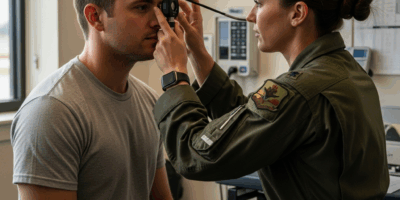
- Schedule a consultation with a military flight surgeon before you enlist or enter OCS. Don’t make my mistake of waiting until flight training to surface this. Contact the nearest Military Entrance Processing Station (MEPS) flight surgeon or reach out directly to the branch’s aviation medical officer. That early conversation clarifies evaluation requirements and, frankly, demonstrates good faith.
- Allow 90-plus days off medication. Use that window deliberately. Maintain employment, keep grades solid if you’re still in school, stay out of any behavioral incidents. You’re building a documented record of functional performance — treat it that way.
- Request a formal neuropsychological evaluation. Go through a flight surgeon or a civilian neuropsychologist with specific military aviation medicine experience. Civilian evaluations cost more — see the $1,500 to $3,000 range mentioned above — but can sometimes run more thorough. Whatever route you take, make sure the evaluation explicitly addresses pilot-relevant domains: attention, executive function, impulse control, sustained performance under stress.
- Disclose fully in every written document and every interview. Concealing ADHD history until after you’ve entered training is disqualifying on its own — and can trigger disenrollment plus breach-of-contract claims. Full disclosure early protects you legally. It also builds exactly the kind of trust with the reviewing flight surgeon that you will need.
- Submit the waiver package through your recruiter or officer selection officer. Include all medical records, neuropsych evaluation results, and a brief statement covering your current functional status. Approval timelines run 2 to 6 months — sometimes longer depending on backlog.
What Kills ADHD Waivers and How to Avoid Those Mistakes
Recent medication use is the fastest path to rejection. Stopped Adderall three weeks ago and requesting evaluation? Denied. Wait the full 90 days minimum — and honestly, if you can stretch it to 6 months, you’re building a stronger case.
Inconsistent history between documents tanks waivers fast. If your medical records say “diagnosed 2015, treated through 2018” but your job application says “no ADHD history,” that gap creates a honesty problem, not a medical problem. Flight surgeons are less troubled by the diagnosis itself and far more troubled by whether they can trust your self-reporting. They need to believe you when you’re in a cockpit at altitude with a problem developing. Don’t give them a reason to doubt you on paper.
Academic or employment records showing ongoing impairment during the evaluation window will kill approval odds. Poor test scores, disciplinary action, performance reviews citing attention issues or incomplete follow-through — all of it signals the condition is still functionally active. Build a clean 90-day window across every area of your life. Grades, job performance, zero incidents.
I’m apparently someone who learns things the hard way, and working earlier with a military physician or veterans service organization specializing in aviation medicine would have saved significant time. Some VSOs have staff who understand flight surgeon evaluation requirements far better than general military recruiters do. Cost is usually minimal or free — which makes it an easy call.
A positive waiver outcome looks like written approval from your branch’s aviation medical authority — typically the Surgeon General’s office or the branch flight surgeon — with a clear statement of eligibility for aviation training. That approval attaches directly to your flight training application.
Realistic timeline from initial record request to final waiver approval: plan for 6 to 12 months. Rushing it or cutting the off-medication window short raises rejection risk considerably. So, without further ado — start early, build your record carefully, and don’t skip steps.



Leave a Reply