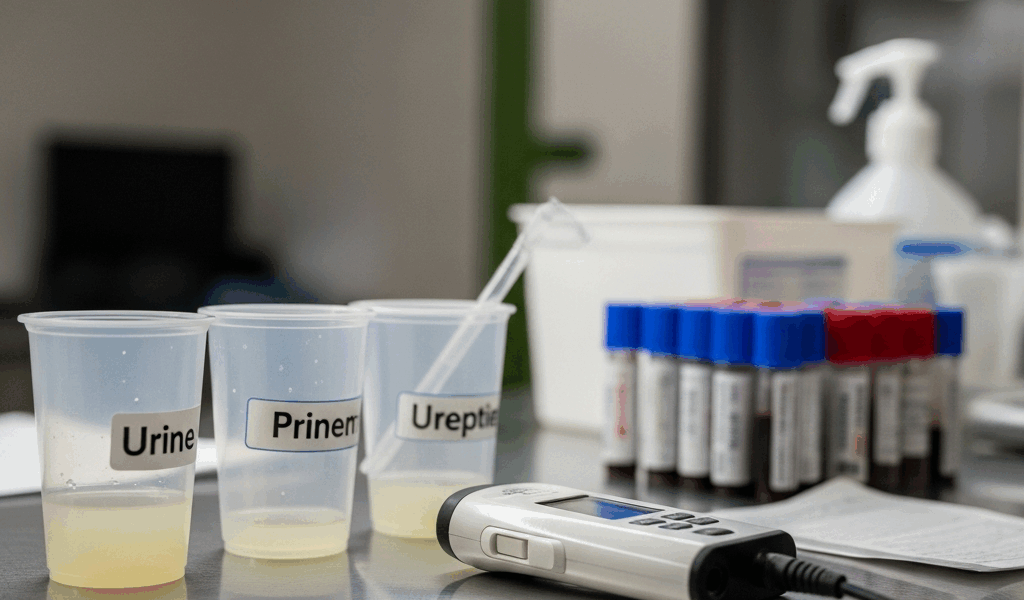
When Drug Testing Happens in the Pilot Pipeline
Military pilot drug testing has gotten complicated with all the misinformation flying around. Most candidates walk into MEPS thinking there’s one test, pass it, and move on. There are actually three separate screening events — each with different timing, different stakes, and very different consequences if something goes wrong.
The first test happens at MEPS, the Military Entrance Processing Station. You’ll pee in a cup during your initial medical evaluation. Simple as that. Fail here and you’re done before you’ve started. Pass and you move on to officer training.
The second test comes during your flight physical — the FC1, FC2, or FC3, depending on your branch. This happens after selection but before you ever touch a cockpit. The Navy and Air Force typically screen again at this stage. Same substances. Higher stakes, because now you’ve already put months into the process.
The third test is random screening once you’re commissioned and flying. Unannounced. Could be once a year. Could be more often during certain operational windows. These are the ones that blindside people who thought they were past all of it.
Probably should have opened with this section, honestly — candidates lose sleep over MEPS for weeks and completely forget the military gets two more shots after that.
What the Military Actually Tests For
The DoD panel is broader than what most civilian employers run. If you’re expecting a standard five-panel test, you’re underestimating this significantly.
Here’s what’s on the DoD panel:
- THC (marijuana)
- Cocaine
- Amphetamines (including methamphetamine)
- Opiates (morphine, codeine, heroin metabolites)
- Phencyclidine (PCP)
- MDMA (Ecstasy)
- Barbiturates
- Benzodiazepines (in some cases)
Post-2020, several branches expanded testing to include synthetic cannabinoids — K2, Spice — and kratom. The Air Force and Navy added these around 2021-2022. The Army followed shortly after. If you’re testing after 2023, assume everything is on the table.
Thresholds matter here. The military’s THC cutoff sits at 50 ng/mL for initial screening and drops to 15 ng/mL for confirmation testing. Corporate drug tests typically use 50 ng/mL as their confirmation threshold. That gap is meaningful — the military’s confirmation standard is significantly tighter.
The Pentagon can also add substances to the panel whenever a particular drug starts showing up frequently in a region or branch. No major warning required. If you’ve used anything recreational within 90 days of your test date, that’s information you need to take seriously.
THC and Marijuana — The Question Everyone Has
I’ll cut straight through the noise: state legality is completely irrelevant here. Colorado, California, wherever — doesn’t matter. The military operates under federal jurisdiction, and federally, THC is still a Schedule I controlled substance. Full stop.
DoD policy is zero tolerance. One confirmed positive for THC is grounds for disqualification or discharge, depending on where in the pipeline it shows up.
That said, there’s a practical 90-day abstinence window that applicants should understand. You can have used marijuana before applying — even somewhat recently — and still pass screening if you’re clean for 90 days before your MEPS urinalysis. This isn’t published policy. It’s how the system actually functions. MROs and military medical professionals recognize that THC stays detectable for 30-90 days depending on frequency, body composition, and individual metabolism. The 90-day buffer was built around that science.
This rule does not extend to other substances. Cocaine, opiates, amphetamines — those are treated differently under military law and require longer clean windows. But THC? Ninety days is the real standard being applied in practice.
Test positive for THC at MEPS and you’ll typically get a retest opportunity after 30 days. That’s your window — use it. A second positive closes the door permanently. Test positive during flight school or active duty and the consequences escalate sharply: separation from service, security clearance review, potential legal action.
What Happens If You Test Positive
The outcome depends entirely on when it happens and what substance triggered it.
Positive at MEPS for THC? You get the 30-day retest window, as mentioned above. Positive at MEPS for cocaine or opiates? That’s disqualifying. No retest. No second chance. The military doesn’t extend the same grace to hard drugs that it extends to THC.
Positive during flight training? You’re pulled from the pipeline immediately — same day, typically. Your security clearance goes under review. Depending on the substance and your command’s discretion, you might face a Medical Board or administrative discharge. Waivers exist for marijuana in rare cases, but they require command sponsorship. Someone with rank has to believe in you enough to formally advocate. That’s uncommon.
Positive during random in-service testing? Referral to the base commander and Inspector General. The process takes longer, but separation is the usual outcome. Random positives are harder to contest because you’ve already signed paperwork acknowledging the policy — multiple times.
One mistake I see candidates make: they take a negative result from a civilian lab and assume they’ll pass military screening. Different machines. Different thresholds. Different protocols entirely. A civilian “clean” result does not guarantee military approval. Don’t make my mistake of thinking those are interchangeable.
Supplements, Prescriptions, and False Positives
This is where people spiral unnecessarily.
Poppy seeds won’t fail a military drug test. The myth is persistent, but the DoD’s thresholds are calibrated high enough that normal dietary consumption doesn’t register. You’d theoretically need 3-4 tablespoons consumed within hours of testing to even approach a false positive — and even then, the MRO review process would flag it as a dietary artifact, not a legitimate positive.
CBD is trickier. Full-spectrum CBD oil can carry trace THC — sometimes labeled “less than 0.3%” but that figure isn’t always accurate in practice. The military draws no distinction between THC from marijuana and THC from a CBD supplement. Tested positive because of a $45 bottle of CBD tincture from a health food store? You’re still positive. My recommendation: cut all CBD products at least 90 days before any testing. The risk-to-benefit ratio doesn’t work out in your favor.
Pre-workout supplements containing synephrine or DMAA — brands like Craze, or older Jack3d formulations — can occasionally trigger false positives for amphetamines. It’s rare, but it happens. If you’re running any pre-workout powder regularly, bring the product label to your medical interview at MEPS.
Prescription medications are handled through the MRO review step. If you’re prescribed Adderall, Ritalin, or any controlled substance, you must disclose that before testing. The MRO contacts your prescribing physician directly to verify. Legal prescription use is not a disqualifier. Non-disclosure is — and it’s a worse problem than the drug itself, because now it’s a character and honesty issue on your record.
The MRO is genuinely on your side here. They review all positives before anything gets reported officially. They check prescriptions. They note dietary factors. They’re not trying to trap candidates — they’re confirming whether a positive is legitimate. Use that process. Be transparent about every medication and supplement when you’re asked. That transparency is what separates a solvable situation from a career-ending one.


Leave a Reply