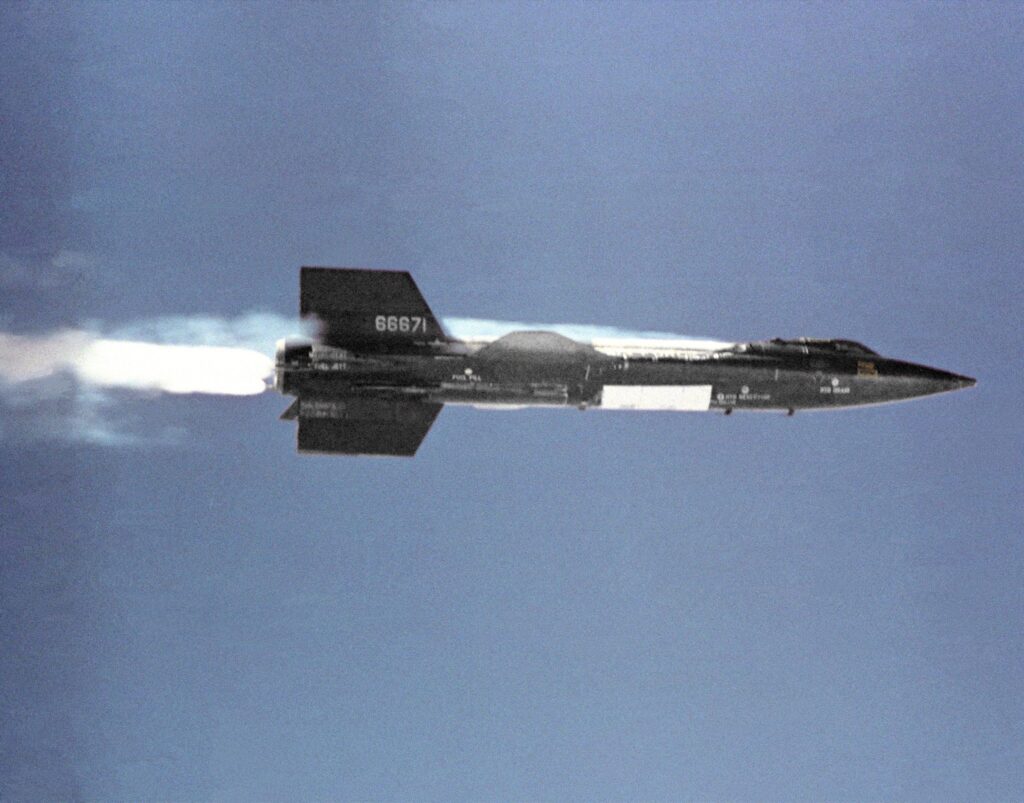
X-15 research aircraft. NASA historical photograph; not a photograph of every flight or component discussed. NASA Image source
The X-15 aircraft required specific material adaptations to survive the extreme thermal environment of hypersonic flight. The outer skin was constructed from Inconel X, a nickel-chrome alloy capable of withstanding high aerodynamic heating rates generated during reentry. To ensure pilot safety and habitability, the cabin was fabricated from aluminum and insulated from the hot outer shell. (Primary source)
Landing procedures were dictated by the aircraft's unique gear configuration. The X-15 lacked steering in its nose landing wheel, and its main landing gear utilized skids instead of conventional wheels. Consequently, all landings were restricted to dry lakebeds. Rogers Dry Lake, located adjacent to Edwards Air Force Base, served as the primary landing site for these high-speed recoveries. (Primary source)



Leave a Reply