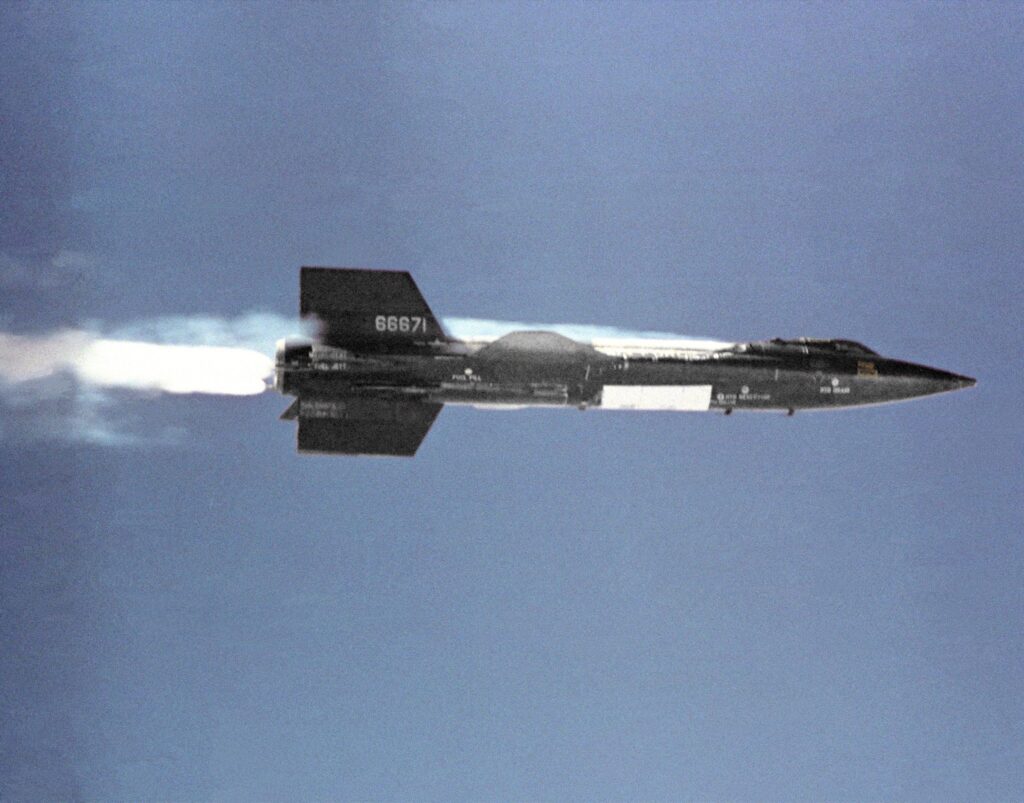
X-15 research aircraft. NASA historical photograph; not a photograph of every flight or component discussed. NASA Image source
When the aircraft was still within the atmosphere, it relied on conventional aerodynamic surfaces: rudders steered yaw, while the horizontal tail managed pitch and roll. These control surfaces became ineffective once the vehicle entered vacuum. (Primary source)
Once beyond the edge of the atmosphere, the X‑15 used a reaction control system powered by hydrogen peroxide. Thrusters mounted on the nose handled pitch and yaw, and additional thrusters on the wings controlled roll. (Primary source)
The program demonstrated that a pilot could maintain attitude through the transition from air to space. It also confirmed that reaction controls were essential for operating a rocket‑powered aircraft in the absence of aerodynamic forces. (Primary source)

Leave a Reply