George W. Lewis’s Oversight of the X‑1 Project
George W. Lewis, NACA’s Executive Officer and later Director of Aeronautical Research, guided the X‑1 program from the governmental side, ensuring its completion and overall success.
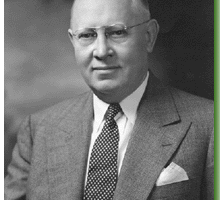
George W. Lewis, NACA’s Executive Officer and later Director of Aeronautical Research, guided the X‑1 program from the governmental side, ensuring its completion and overall success.
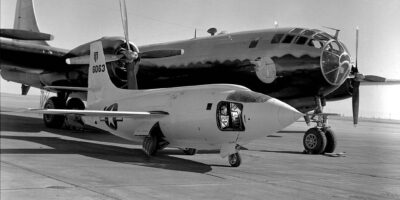
On Jan. 19, 1946, Bell test pilot Jack Woolams flew the X-1-1 in its initial unpowered glide at Pinecastle Field, Florida. After ten flights testing low-speed handling, the aircraft returned to Bell Aircraft Corporation in March 1946 for rocket engine installation before delivery to NACA.
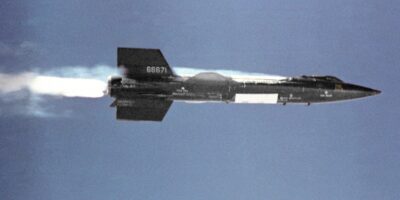
The X‑15 was a joint effort between NASA, the U.S. Air Force, the U.S. Navy, and North American Aviation. Its first unpowered glide occurred on 8 June 1959, and the first powered flight followed on 17 September 1959. The program collected data on hypersonic flow, aerodynamic heating, stability, reaction controls above the atmosphere, reentry techniques, human factors, and instrumentation.
The X‑1‑2 was grounded after its nitrogen‑pressurized tanks approached fatigue limits. The X‑1E returned with a redesigned fuel system, while the X‑1‑3 eliminated nitrogen tanks altogether by adopting a turbopump, achieving speeds up to Mach 2.4.
During the joint NASA, USAF and Navy X‑15 program, pilots flew either a level‑altitude speed profile or a steep‑climb high‑altitude profile. In both cases, recorded heart rates spanned 145–185 beats per minute, markedly higher than the 70–80 bpm typical of other test aircraft, reflecting the pre‑launch stress of the missions.
During the X‑15 program, crews followed one of two main flight plans: a speed‑focused route that kept the aircraft at a constant altitude before descent, and a high‑altitude plan that involved a steep climb to reach a peak altitude before returning.
The X-15 utilized Inconel X for its outer skin to endure hypersonic reentry heat, while the aluminum cabin remained insulated for pilot safety. Recovery relied on skids rather than wheels, necessitating landings exclusively on dry lakebeds like Rogers Dry Lake.
The X‑15 switched from aerodynamic controls to reaction control systems as it left the atmosphere. In space, hydrogen peroxide thrusters managed attitude.

Paper chart and planning tools. Illustrative planning photograph; not an official 2027 pay table. Existing Military Pay Table media library Image source You came looking...
Stay in the loop
Get the latest milpilot net updates delivered to your inbox.