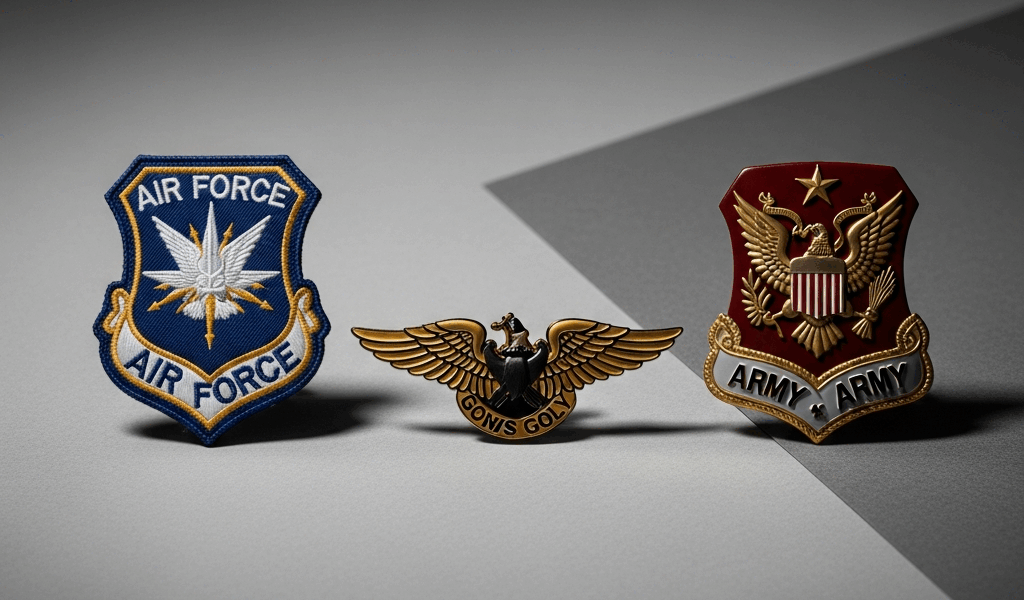
Best Branch for Military Pilots — AF vs Navy vs Army
Which military branch is best for pilots has gotten complicated with all the recruiter noise, Reddit threads, and YouTube war stories flying around. As someone who’s spent years talking to active-duty aviators, washed-out candidates, and guys who flew their last military sortie on a Friday and started airline new-hire training the following Monday, I learned everything there is to know about this particular decision. And the honest answer? There isn’t one branch that fits everyone. The right branch depends entirely on what you actually want to do with your flying career — before, during, and after your service commitment. So let’s go branch by branch and then give you a real verdict based on your specific situation.
One thing upfront: this isn’t a recruiter pitch. Every option here has genuine tradeoffs that the guy behind the desk at MEPS probably won’t volunteer — possibly because he doesn’t know them himself.
Air Force — Most Aircraft Variety
The Air Force operates the largest and most diverse pilot force in the world. Full stop. If you want real options — not the theoretical kind printed in a brochure — this is where they live. F-22 Raptors, F-35A Lightning IIs, B-52 Stratofortresses that have been flying longer than your parents have been alive, KC-135 tankers, C-17 Globemasters, MQ-9 Reapers. The pipeline alone gives you exposure to a breadth of aviation no other branch can match.
But what is Air Force pilot life, really? In essence, it’s the most structured, most documented, most airline-pipeline-friendly flying career the military offers. But it’s much more than that. Surprised by how many people don’t realize this: the Air Force also has the most stable base-life situation of the combat branches. Assignments typically run 2–3 years at a single installation — places like Luke AFB in Arizona or Langley in Virginia — entire communities built around pilot culture. Decent schools, officer housing, spouses who’ve been through the rotation cycle enough times to have it down cold. Compared to what Navy pilots deal with during sea duty, that’s a meaningful quality-of-life advantage, especially for families.
Fighter Track
Getting a fighter slot requires finishing near the top of your Undergraduate Pilot Training class — UPT, held at bases like Columbus AFB in Mississippi or Vance AFB in Oklahoma. The T-6 Texan II is your first aircraft. A 1,100 shaft-horsepower turboprop that will very quickly separate people who read books about flying from people who can actually fly. After T-6s, you move to either the T-38 Talon — the fighter and bomber path — or the T-1 Jayhawk for heavies and tankers. The T-38 track is where fighter dreams either get confirmed or quietly redirected.
Frustrated by the T-38 syllabus, more than a few competitive candidates have ended up in the heavy world flying C-17s into remote strips in Alaska or sub-Saharan Africa — and gone on to genuinely love it. That’s not a consolation prize. The mission significance is hard to match.
Drone Flying in the Air Force
Here’s a reality nobody wants to bring up in the recruiter’s office: MQ-9 assignments are increasingly common, and they’re not temporary. The Air Force has struggled with retention in RPA — Remotely Piloted Aircraft — communities partly because some pilots feel disconnected from what they originally imagined flying to be. Know this going in. If you’re fine with it — and some genuinely are, especially those with strong tactical intelligence interests — the 432nd Wing out of Creech AFB in Nevada runs a sophisticated operation. But if you dreamed of G-forces, factor in the real probability of an RPA assignment before you sign anything.
The Airline Pipeline
Air Force pilots consistently rank among the most sought-after candidates at Delta, United, and American. Structured training records, multi-crew experience in large aircraft, solid instrument proficiency — it all translates directly. Most heavy and tanker pilots hit ATP minimums well inside their service obligation window. One pilot I spoke with logged over 3,200 hours in C-17s before his 10-year commitment ended — walked into a Delta class date within four months of separation. Don’t make my mistake of assuming the airline path is easier from one branch than another without actually running the numbers on hours and timing.
Navy — Carrier Aviation Experience
Navy aviation is its own world. Carrier-qualified. That phrase means something no amount of reading fully prepares you for — a 300-foot runway moving through 30-foot swells at night, your jet already at full power on approach because you may need to bolt at any second. The arrested landing, the catapult shot at dawn, the smell of jet exhaust on a flight deck. It is genuinely the most demanding aviation environment in the world, and the Navy owns that distinction without argument.
The tradeoff is intensity and community size. Naval aviators fly F/A-18 Super Hornets, EA-18G Growlers, E-2C/D Hawkeyes, and MH-60 helicopters, among others. The community is smaller than the Air Force — which means competition for top billets is fierce and your reputation follows you closely. Everyone knows everyone. That’s what makes Navy aviation endearing to the people who belong in it.
Sea Duty and Deployment Rhythms
Probably should have opened with this section, honestly — especially for anyone weighing the Navy with a family at home. Deployments on a carrier strike group typically run 6–9 months. That sounds comparable to Army combat deployments, but the intensity is different. You’re flying combat sorties, doing carrier quals, standing duty, all while living in a stateroom roughly the size of a walk-in closet. The operational tempo during a deployment is relentless in a way that’s genuinely hard to communicate without experiencing it.
Shore duty exists and it’s genuinely good — Pensacola, NAS Oceana in Virginia Beach, Lemoore in California. But the sea-shore rotation means you will spend significant chunks of your career underway. That’s not a deterrent for the right person. It’s just the reality.
Strike Fighter — The Premium Track
The F/A-18 community is arguably the most prestigious tactical aviation track in any branch. The mission set is broad — air superiority, close air support, strike, fleet defense. The Naval Aviation Warfighting Development Center at Fallon, Nevada runs what everyone still calls Top Gun, and the tactics and skill level in that community are exceptional. If flying fighters is the non-negotiable goal and you want the hardest version of it, the Navy is a serious contender alongside the Air Force F-22 and F-35 tracks. No hedging there — it’s legitimately that good.
Navy to Airlines
Navy pilots transition to the airlines extremely well. Multi-crew coordination, demanding instrument work, sheer hours in high-stress conditions — competitive candidates across the board. The timeline to ATP minimums is similar to Air Force counterparts. The difference, honestly, is that some Navy pilots — having done carrier aviation — find it genuinely hard to walk away even when the airline paycheck is objectively better. That probably tells you something about what the experience does to people.
Army — Warrant Officer Path Without a Degree
This section is for a completely different person than the last two. The Army Warrant Officer aviator route is one of the most underappreciated paths in all of military aviation — largely ignored in comparison articles written by people who’ve apparently never actually spoken to a Warrant Officer pilot.
Here’s the core fact: you do not need a four-year college degree to fly for the Army as a Warrant Officer. You need 90 college credits, a high school diploma, and a passing score on the SIFT — the Selection Instrument for Flight Training. That’s it. You can be in a cockpit at 20 years old with a GED and some community college credits behind you. No other branch of the U.S. military offers that. Full stop.
What You’ll Fly
Army aviation is helicopter-dominant — UH-60 Black Hawks in multiple variants, AH-64 Apaches, CH-47 Chinooks, and the OH-58D Kiowa, which is being replaced under the Future Attack Reconnaissance Aircraft program by the Bell 360 Invictus and Sikorsky Raider X. Serious aircraft doing serious missions. Apache pilots conduct armed reconnaissance and direct attack. Black Hawk pilots handle medevac, assault, and special operations support. Chinook crews move equipment and troops that no other platform can.
The rotary-wing world is different from fixed-wing — the physical demands, the tactics, the civilian career trajectory. Helicopter pilots get hired by offshore oil operations, EMS services, law enforcement aviation units, corporate charter outfits. Bureau of Labor Statistics median for helicopter pilots runs around $80,000–$100,000 annually in civilian roles, with offshore and EMS pushing noticeably higher. It’s a real career path with real demand, not a fallback.
Speed to Cockpit
The Warrant Officer route is genuinely faster. Enlisted to flight school can happen within 18–24 months of joining. Compare that to commissioning as an Air Force or Navy officer — four years of college plus OTS or a service academy for many people — and the Army timeline is dramatically compressed. For someone who knows they want to fly and doesn’t want to spend years doing other things first, that’s a legitimate advantage worth taking seriously.
Don’t make my mistake of assuming Warrant Officers are somehow lesser than commissioned officers in aviation. In the cockpit, an experienced CW4 Apache pilot with three combat deployments carries more practical authority and institutional knowledge than almost any junior officer on the flight line. Rank structure and tactical credibility are different things entirely.
The Verdict by Career Goal
Here’s the part most comparison articles skip — the actual answer depends on you, not on which branch has the coolest jets on their website.
If You Want to Fly for the Airlines After Service
Go Air Force or Navy. Both produce pilots with records, training documentation, and multi-crew experience that airlines actively want. Air Force heavy and tanker pilots often accumulate the most raw hours. Navy fighter pilots bring tactical credibility and CRM experience forged under genuinely extreme conditions. Either path works. The Air Force edge here is slightly better quality of life during the service commitment — which matters if you’re grinding out 10 years before you transition to the right seat at a regional.
If You Want Fighters — Non-Negotiable
Air Force or Navy. The Air Force has F-22 and F-35A. The Navy has F/A-18E/F and F-35C. The Marine Corps — which runs through Navy aviation training — has F/A-18 and F-35B STOVL. If tactical jet aviation is the only thing that interests you, you need a commission, a degree, and a high AFOQT or aviation selection board score. There’s no shortcut and no other branch offers it. Anyone who tells you otherwise is either confused or selling something.
If You Want to Fly Without a Four-Year Degree
Army Warrant Officer. It is the only route. Full stop. Don’t let anyone complicate this answer with hypotheticals.
If You Want Special Operations Aviation
The Army’s 160th SOAR — the Night Stalkers — is the premier special operations aviation unit in the world. You need to be an Army aviator first, then try out. Brutally selective. But if that mission set appeals to you at all, Army aviation is the entry point to the most demanding rotary-wing special operations flying that exists anywhere.
If You Want to Stay In and Make General — or Fleet Admiral
Commissioned officer path — Air Force or Navy. Warrant Officers top out at CW5, and that’s a respected, well-compensated career. But the flag officer track requires a commission. Know what you’re optimizing for before you choose your entry point, because backing up later is expensive in time and sometimes impossible.
The branch choice for pilots is genuinely consequential — and the internet is full of people who picked based on a movie or a recruiter’s enthusiasm rather than an honest look at their own goals and tradeoffs. Talk to pilots who’ve actually served in the branch you’re considering. Ask what they wish they’d known at 19. The answers are always more specific, and more useful, than anything a comparison chart gives you.


Leave a Reply