What a Military Pilot Waiver Actually Is
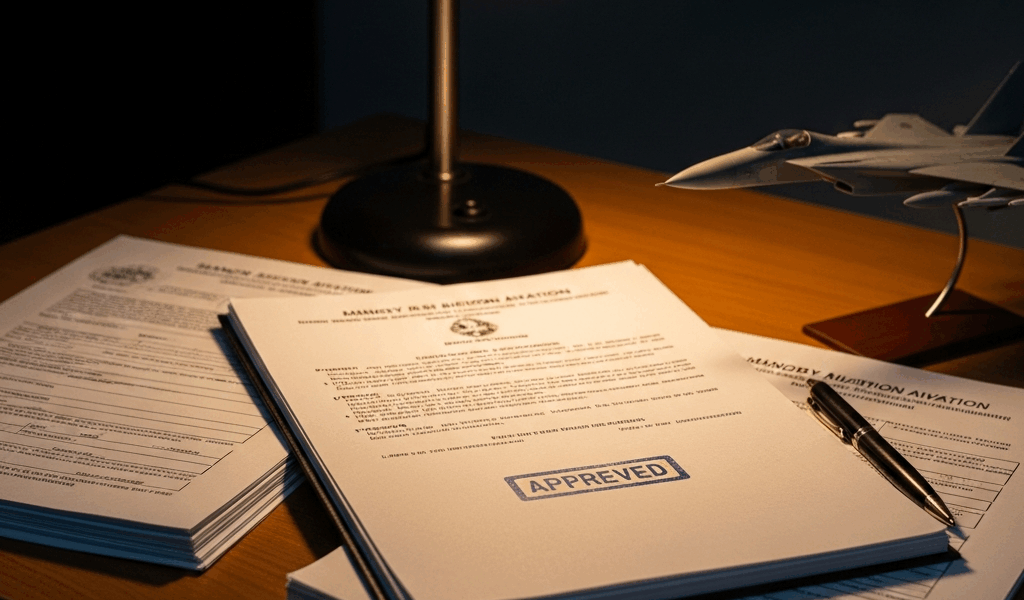
Military aviation careers have gotten complicated with all the misinformation flying around about medical disqualifications. When I started digging into this process five years ago, I assumed a disqualifying finding meant the door was permanently shut. It doesn’t. A military pilot waiver is a formal exception request — a document that essentially says, “Yes, this person has a condition that normally bars them from service. Here’s the case for letting them fly anyway.”
But what is a waiver, really? In essence, it’s a petition to a higher authority to accept a calculated risk. But it’s much more than that. It’s branch-specific, heavily bureaucratic, and nothing like anything you’d encounter in a civilian medical appeal process.
Probably should have opened with this section, honestly. Most applicants don’t even know waivers exist. They get a denial letter, assume it’s permanent, and walk away from an aviation career they didn’t have to abandon.
Waivers fall across three categories: medical, moral, and administrative — age falls into that last one. This article focuses on medical waivers. They account for the largest share of pilot rejections and also offer the clearest reversal pathway. When a flight surgeon documents a disqualifying condition during your evaluation — vision issues, orthopedic history, a managed health condition — that finding doesn’t kill your career automatically. It starts the waiver process instead.
Here’s what you need to understand going in: waivers are not guaranteed. Approval rates shift depending on the condition, the branch, and how well your documentation is assembled. The Air Force, Army, Navy, and Marine Corps each run their own waiver authorities with their own medical standards. Something waived by one branch gets denied by another. Processing runs anywhere from eight weeks to six months. Enter this with patience and realistic expectations — or you’ll burn out before the process is halfway done.
Which Conditions Are Waiverable and Which Are Not
Not all medical disqualifications are created equal.
Commonly waived conditions include mild refractive errors outside standard range — myopia, hyperopia, astigmatism — corrected vision after LASIK or PRK, controlled hypertension managed on a single medication, minor orthopedic history without current limitations, and well-controlled seasonal allergies. I’ve seen approvals come through for resolved stress fractures, appendectomy history, and past mild dermatitis. These aren’t flukes.
The Air Force waived a candidate’s -2.75 diopter refractive error last year. The Navy approved a pilot applicant who’d had ACL reconstruction eight years prior — no recurrent instability, clean documentation, solid recovery timeline. That was it. Neither decision happened by accident. Both applicants submitted thorough packages proving their conditions posed no real risk to flight operations.
Hard disqualifiers are a different story entirely. Certain cardiac arrhythmias, significant structural heart disease, diagnosed bipolar disorder or schizophrenia, active substance abuse, severe color blindness, multiple sclerosis — these almost never get waived. A flight surgeon won’t even build the package for most of these. The medical evidence is too overwhelming, and the branch waiver authority would reject it on arrival.
The gray zone is larger than most people realize, though. Controlled diabetes? Depends on the type, the control level, the branch. Migraine history? Depends on frequency, triggers, current status. Previous orthopedic surgery? Depends on the procedure, recovery timeline, and functional outcomes. That’s what makes the waiver process both frustrating and genuinely worth pursuing for applicants who fall into the middle ground.
This is why branch selection matters enormously. The Air Force holds some of the strictest aviation medical standards across all services. Army helicopter pilot standards differ from fixed-wing standards. The Navy leans hard on cardiac and vestibular fitness. Marine Corps largely mirrors Navy standards with branch-specific wrinkles. Before pouring energy into a waiver package, confirm you’re targeting the branch most likely to approve your specific condition. Don’t make my mistake — I spent three months building documentation for the wrong branch entirely.
Who Reviews Your Waiver and How the Process Works
Understanding the review chain clarifies exactly what you’re navigating — and why speed simply doesn’t exist here.
It starts at your medical evaluation. A flight surgeon documents the disqualifying condition in your official medical record. That’s a finding, not a recommendation. The moment it’s documented, you’re frozen at that evaluation stage. Your recruiting officer or aviation selection officer notifies you in writing. Disqualified, pending waiver review.
Then the process branches. Your flight surgeon or recruiting medical officer determines whether the condition warrants formal waiver review at all. If it does, they build the package. You cannot submit this yourself — it flows up through the recruiting or military medical chain depending on your applicant status.
From there, the package reaches the branch waiver authority. Air Force waivers route to the Aeromedical Consultation Service at Brooks Space and Missile Systems Center in San Antonio, Texas. Army waivers go to the Army Aeromedical Center at Fort Rucker, Alabama. Navy waivers flow through the Naval Aerospace Medical Institute in Pensacola, Florida. Marine Corps typically defers to Navy standards but retains its own final approval authority.
Each of these organizations runs standing review panels — flight surgeons, relevant specialists, senior medical officers. They assess the evidence and produce a recommendation. That recommendation climbs to the final waiver authority, usually a general officer or senior medical director, who makes the actual call.
Timeline expectations: eight to twelve weeks for clean, well-documented cases. Sixteen to twenty-four weeks for complex conditions requiring specialist input. Some branches stack additional review layers on top of that. The Army notoriously slow-walks aviation medical waivers. I’ve seen applicants sit at five months waiting on a decision. During all of it, you cannot move forward in the selection process. You’re in limbo. Accepting that early is genuinely the only way to manage it.
How to Strengthen Your Waiver Package
This section is where you actually have control over something. So, without further ado, let’s dive in.
Start before the formal process if you can. If you already know about a potentially disqualifying condition — corrected vision, orthopedic surgery history, managed hypertension — request a confidential flight surgeon consultation before your official evaluation. Many recruiting flight surgeons offer these. You’ll learn exactly what documentation you need and what your realistic odds look like. That prevents surprises and, more importantly, buys you time to gather records.
When a disqualification does land, immediately request copies of the medical findings in writing. Understand exactly what was documented and why. Ask for clarification if anything looks incomplete or inaccurate. Medical records contain errors — catching them early matters more than most applicants realize.
Gather specialist documentation. Civilian physician records, initial evaluation notes, test results, follow-up visits, current status assessments. A cardiologist’s letter confirming your controlled hypertension poses no operational flight risk carries real weight. An ophthalmologist’s report confirming stable post-LASIK vision that meets functional requirements helps. An orthopedic surgeon’s clearance stating full functional recovery from prior surgery — complete with range-of-motion measurements and return-to-activity timelines — strengthens the package substantially.
Include letters from treating physicians, but make them specific. Generic letters accomplish nothing. A letter that says, “The patient’s refractive error is stable, well-corrected with contact lenses, and poses no operational risk during flight operations” creates persuasive evidence. Vague language doesn’t.
While you won’t need a wall of trophies, you will need a handful of supporting materials beyond pure medical records. Physical fitness test scores, academic records, prior service documentation, letters from commanding officers or flight instructors — these signal commitment. Strong PT scores alongside a solid academic record tell a waiver panel this isn’t a casual application from someone hoping for a workaround.
Demonstrate stability or resolution clearly. If the condition was temporary — a stress fracture that healed completely — show the evidence. X-rays, follow-up clearances, return-to-activity documentation. If it’s ongoing — managed hypertension, controlled diabetes — show consistent treatment compliance and stable lab values across multiple months. Numbers and dates. Specifics.
Never submit an incomplete package. I’ve seen waivers denied because one document was missing, forcing resubmission and adding months to the timeline. Call the medical office. Confirm every item before it goes anywhere. Don’t assume.
What Happens If Your Waiver Is Denied
Denial is not automatic permanent disqualification. That’s worth repeating.
Many applicants resubmit successfully after a first denial. Sometimes the denial letter specifies what failed — missing documentation, insufficient specialist input, medical evidence that didn’t support approval. Address those exact points in resubmission. The Air Force and Army allow formal appeals. The Navy is more restrictive, but reconsideration options still exist depending on circumstances.
Condition resolution over time opens doors. Denied for an orthopedic condition? Wait twelve months, resubmit with updated physician clearance showing continued stability, and the second attempt often succeeds. Denied for a managed condition? Demonstrate twelve consecutive months of consistent control and medication compliance and the package looks materially different the second time around.
Explore alternative paths too. Warrant officer pilot positions in the Army sometimes carry different medical standards than commissioned officer slots. Reserve and Guard aviation components occasionally hold more flexibility than active duty tracks. Helicopter pilot medical requirements sometimes differ from fixed-wing requirements. If the primary path closes, lateral options exist — at least if you’re willing to look for them.
Timing matters more than people acknowledge. Come back in two years if reapplication policies allow. Medical standards shift. New evidence emerges on specific conditions. Branch operational needs change, and waiver approval rates sometimes move with them.
A denial stings. I’m apparently someone who takes these things personally, and the frustration of a multi-month wait ending in a rejection letter is genuinely difficult. But it is not the final word unless you decide to treat it that way. Some of the most persistent aviation applicants I’ve encountered got approved on the second or third attempt — stronger documentation, better timing, or a fully resolved condition. It happens regularly. Don’t make my mistake of assuming the first answer is the only answer.




Leave a Reply