What Cognitive Tests Do Military Pilots Actually Take
Spent three years embedded with military aviators prepping for selection boards, and here’s what nobody tells you upfront — everyone fixates on the physical stuff. Vision standards, G-tolerance, height limits. But your brain gets tested just as hard as your body, and almost nobody talks about it.
The Air Force runs the AFOQT (Air Force Officer Qualifying Test). Navy and Marines? They use the ASTB — Astrospacial Test Battery. Army has Officer Candidate School assessments, but they don’t carve out a separate cognitive pilot screen the same way the other branches do.
Here’s what you’re actually sitting down to take.
The AFOQT Breakdown for Pilots
Five hours. Eight different subtests. But here’s the thing nobody mentions — only some of them actually matter for pilot slots. You could crush Verbal Analogies and completely bomb the sections that predict cockpit performance, and you’d still wash out as non-competitive.
The Pilot Score. That’s what matters. It weights three subtests: Spatial Apperception (the heavyweight), Arithmetic Reasoning, and Reading Comprehension. Your score lands somewhere between 1 and 99 as a percentile. That single number is basically your ticket punched or not.
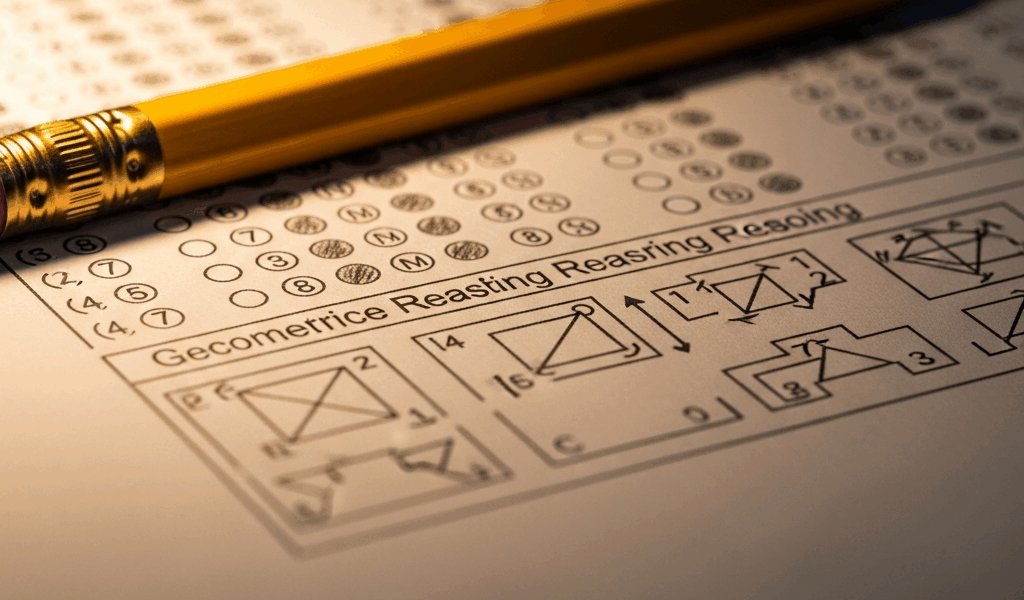
Spatial Apperception is where candidates lose it. Not geometry — mental rotation and 3D visualization under time pressure. Abstract shapes rotating in space, you’ve gotta predict where they’re headed. Watched smart candidates who killed the verbal sections just freeze here. Most never prepped it separately, and it showed.
Arithmetic Reasoning is basic math — no calculator allowed. Percentages, ratios, word problems. Nothing past algebra. The actual trap is timing. You’re looking at roughly 60 seconds per problem. Both speed and accuracy matter.
Reading Comprehension is dense passages and factual recall questions. Pilots who read regularly usually nail this. The ones who struggled? They under-prepped because it looked “easy.”
The ASTB for Navy and Marine Pilots
Navy’s ASTB runs about 2.5 hours and stays laser-focused. Seven subtests total, but for pilot selection the ones that count are Mechanical Comprehension, Spatial Apperception, and Reading Skills.
Mechanical Comprehension tests how you think about physics and mechanical systems — pulleys, levers, force, pressure. Not memorized formulas. It’s intuition about how things move. Navy pilots need this because carrier operations mean understanding aircraft systems differently than the Air Force traditionally screens for.
The ASTB’s Spatial Apperception is different from the AFOQT version. It leans harder into instrument interpretation — looking at instrument panel readings and imagining aircraft attitude. That’s more directly tied to actual flying than the AFOQT’s pure shape rotation.
Probably should have opened with this section, honestly — the ASTB also has a Biographical Inventory section. It’s not a test. It’s a questionnaire about background, interests, personality. The Navy weights this heavily. A candidate could hit 95th percentile on every subtest and then tank the biography section and still miss competitive range.
Score Thresholds and What Qualifies You by Branch
Here’s where the numbers actually live. Passing and competitive are two entirely different things.
Air Force AFOQT Pilot Score Requirements
The Air Force won’t publish a hard minimum Pilot Score for selection. Officially, 25th percentile gets you eligible. But eligible and competitive are miles apart.
Looking at 2023 and 2024 boards, competitive Pilot Scores were typically 85th percentile and above. The boards with the fewest slots? Selected candidates were averaging 92nd percentile and higher. Selection rates hover around 8–12% overall — that means 88% of qualified applicants don’t get selected. The Pilot Score is one of the first cuts.
An 80th percentile won’t necessarily close the door, but you’re starting behind someone at 90th percentile. You’re relying on everything else compensating — TBAS performance, package strength, college GPA, flight background.
Here’s how the weighting actually works: if you’re sitting at 70th percentile in Arithmetic Reasoning but 92nd in Spatial Apperception, the scoring skews in your favor. Air Force knows spatial reasoning predicts instrument flying better than math. Sometimes candidates hit 88th percentile overall but 94th on the actual Pilot Score.
Navy ASTB Competitive Ranges
Navy reports ASTB as an 8-point scale. A 5 or above is competitive for pilot selection. Sounds simple. It’s not.
An ASTB Score of 5 is technically eligible. A 7 or higher is genuinely competitive — puts you in range for selection. An 8 is rare, roughly top 5% of test-takers, and signals strong candidacy beyond just the cognitive piece.
The biography inventory matters hard. Strong subtest scores paired with a profile flagged as “low conscientiousness” or “risk-prone” can ding your overall score. Navy is screening for cognitive ability and psychological fit for carrier operations.
Marines Use ASTB Too
Marine pilot requirements sit alongside Navy thresholds but with slightly different priorities. Marines weight Mechanical Comprehension more heavily — Marine aviation leans into close air support and damage assessment. Officer selection boards factor test scores differently, but the ASTB itself is identical across both services.
How to Prepare Without Wasting Time
Eight to twelve weeks is the standard prep window. More isn’t better — after ten weeks, diminishing returns hit hard.
Start With Your Weakness
Take a full-length practice test first. Don’t cram before it. Your raw score will scare you — that’s intentional. Your weakness is already visible. If you scored 65th percentile in Spatial Apperception, that’s your focal point. Spend 40% of study time there for the first four weeks.
Spatial reasoning doesn’t improve through passive reading. You need timed practice. Mindsumo and Magoosh both have spatial reasoning drills. Twenty problems daily, strictly timed, tracking speed and accuracy. Week-to-week improvement is noticeable.
Arithmetic is the reverse problem — most candidates over-study it. One solid week locks it in. Mental math tricks matter: percentage shortcuts, ratio conversions, quick estimation. The test rewards speed.
Reading Comprehension Strategy
This is where candidates leak points by not prepping. Dense passages, questions that reward specific scanning skills, not deep comprehension. Read the questions first. Scan the passage for answers. Spend 3–4 minutes per passage max.
Most study materials are bloated garbage. The official AFOQT or ASTB study guides (AFOQT.com and Navy.mil) plus one additional resource — Barron’s Officer Candidate Tests. That’s it. More materials create confusion, not confidence.
Timing and Full-Length Practice
Do at least two full-length practice tests under actual conditions — timed, no breaks except the official ones, proctored environment. The first one is diagnostic. The second happens in week 10 and shows real progress. If you’re not hitting target percentiles by then, you know where to drill before test day.
The mental fatigue of five hours is real. Your brain slows by hour four. Practice that fatigue.
What Happens If You Score Below Competitive Range
This is the section I wish existed when I was advising candidates who couldn’t crack 80th percentile.
AFOQT Retake Rules
Air Force allows retakes. 120 days between attempts minimum. Your most recent score gets submitted — you’re not averaging. A 78th followed by a 91st gets submitted as a 91st.
Realistically, you get two serious attempts before timeline compresses. Selection boards see test history. A 15-point jump signals deliberate study, and boards respect that. A third retake? That suggests the score plateau is real.
Navy ASTB Retake Policy
Navy allows one retake within 12 months. One. You don’t get multiple chances like the Air Force. This is why ASTB prep is more critical — you’re not banking on a second full attempt.
Score a 4 (below competitive) and retake to hit a 5? You’re eligible but fighting uphill. Navy tracks both scores, and selection boards note the margin. A candidate who scored 5 on the first try looks stronger than someone who needed a retake.
Alternative Paths Exist
Low pilot scores don’t kill your military aviation career. Options: flight officer, navigator, combat systems officer, unmanned systems, air battle management. These roles often have lower cognitive cutoffs but still offer meaningful aviation careers.
Some candidates intentionally pivot. A 75th percentile Pilot Score doesn’t compete for pilot slots, but qualifies for many other rated officer positions. Income, benefits, and job satisfaction are comparable in plenty of cases.
Real Talk Misconceptions About Pilot Cognitive Testing
Myth: “You need genius-level IQ to be a pilot.”
False. The 50th percentile on these tests is average intelligence by definition. Military selects pilots from the top 10–15% of test-takers. That’s above-average logical reasoning and spatial visualization — not genius territory. Hundreds of thousands of Americans hit that level yearly. The screening narrows the pool, it doesn’t identify Einstein.
Myth: “One bad section disqualifies you.”
Mostly false for Air Force. The Pilot Score weights subtests. You can underperform one area and still score competitively overall if you crush others. Navy integrates scores differently — one weak section drags overall down more noticeably. But a single subtest failing you outright? Rare.
Myth: “Test scores don’t matter compared to flight hours or GPA.”
Untrue. Pilot Score is one of the earliest filters. High GPA and 200 flight hours don’t exempt you from a competitive Pilot Score. Selection boards tier candidates first by test scores, then by other factors within tiers. You can’t out-GPA a weak Pilot Score. You can out-GPA candidates with similar test scores.
Myth: “You can’t improve spatial reasoning; it’s innate.”
Empirically false. Tracked candidates who scored 58th percentile in spatial apperception initially and 89th after eight weeks of targeted daily practice. Spatial reasoning responds to practice more reliably than reading comprehension does. It’s learnable, not fixed.
One final honest note: I’ve seen candidates ace these tests and wash out of pilot training for reasons having nothing to do with cognition — medical issues, performance anxiety in the aircraft, or realizing the career wasn’t what they expected. The test qualifies you. It doesn’t make you a pilot. That part comes later, and it’s much harder.


Leave a Reply