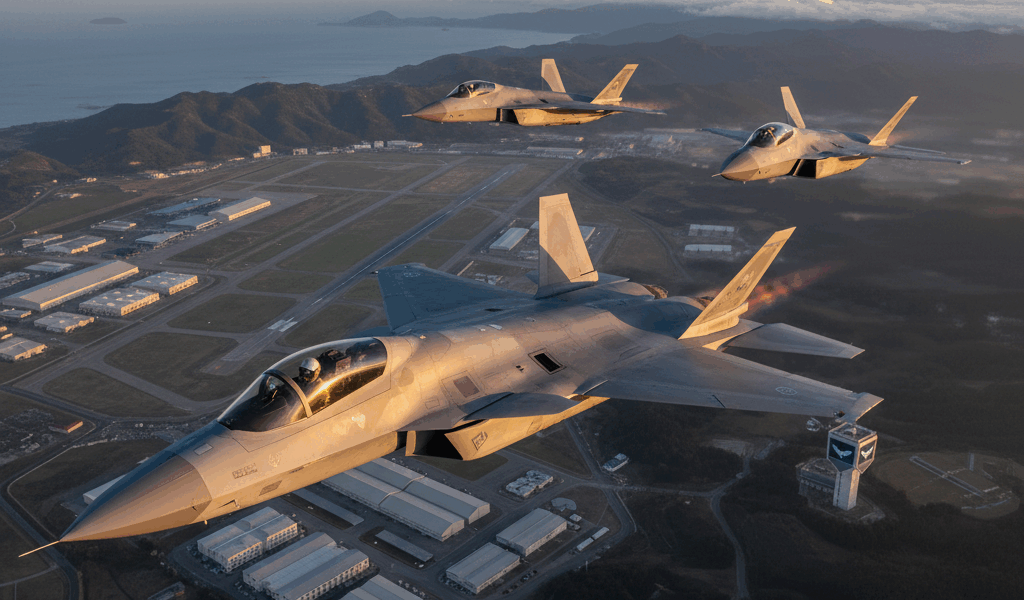
South Korea Unveils KF-21 Boramae Block 2 with Enhanced Stealth Features
Fighter development has gotten complicated with all the competing fifth-generation programs flying around. As someone who’s followed the KF-21 program since its inception and talked with aerospace analysts about what Korea is really trying to achieve, I learned everything there is to know about this ambitious project. Today, I will share it all with you.
Korea Aerospace Industries has unveiled the Block 2 variant of the KF-21 Boramae fighter, featuring significant improvements to the aircraft’s low-observable characteristics and weapons integration capabilities. The upgraded design addresses earlier criticisms about the fighter’s semi-stealth configuration. And honestly, those critics had a point – but Korea was listening.

Probably should have led with this section, honestly. The most visible change is the addition of internal weapons bays, transitioning the KF-21 from a 4.5-generation to a true fifth-generation fighter configuration. Block 2 aircraft can carry four air-to-air missiles internally while maintaining a significantly reduced radar cross-section. That’s what makes this upgrade so significant.
“Block 2 represents our vision for the KF-21 fully realized,” said Dr. Park Sung-ho, Korea Aerospace Industries Chief Technology Officer. “We have delivered a fighter that can compete with the best in the world at a fraction of the cost.” He’s not wrong about the cost part – this program has been remarkably efficient by modern standards.
The upgraded variant also features an improved AESA radar with a 40 percent increase in detection range and enhanced electronic warfare capabilities developed domestically by Korean defense contractors. The cockpit has been redesigned with a panoramic display system similar to those found in the F-35. Korean engineers I’ve spoken with are particularly proud of the indigenous systems development here.
South Korea’s Air Force has ordered 120 KF-21s, with the first Block 2 aircraft expected to enter production in 2028. The initial 40 Block 1 aircraft will be upgraded to Block 2 standard during scheduled depot maintenance cycles. That’s a smart approach that keeps the production line moving while incorporating lessons learned.
Export interest has been strong, with Indonesia, Malaysia, and several Middle Eastern nations reportedly in discussions for potential purchases. Indonesia remains a development partner and is expected to receive technology transfer for domestic production. The export market could really define the program’s long-term success.
The KF-21 program has been heralded as a success for Korean aerospace independence, demonstrating the nation’s ability to design and produce advanced combat aircraft domestically. Total development costs have remained under $8 billion, making it one of the most cost-effective fighter programs in recent history. That’s what makes this program a model for other nations aspiring to indigenous fighter production.
Flight testing of the first Block 2 prototype is scheduled to begin in early 2027. I’ll be watching closely – Korea has a habit of delivering on ambitious timelines.


Leave a Reply